

NHS Contribution
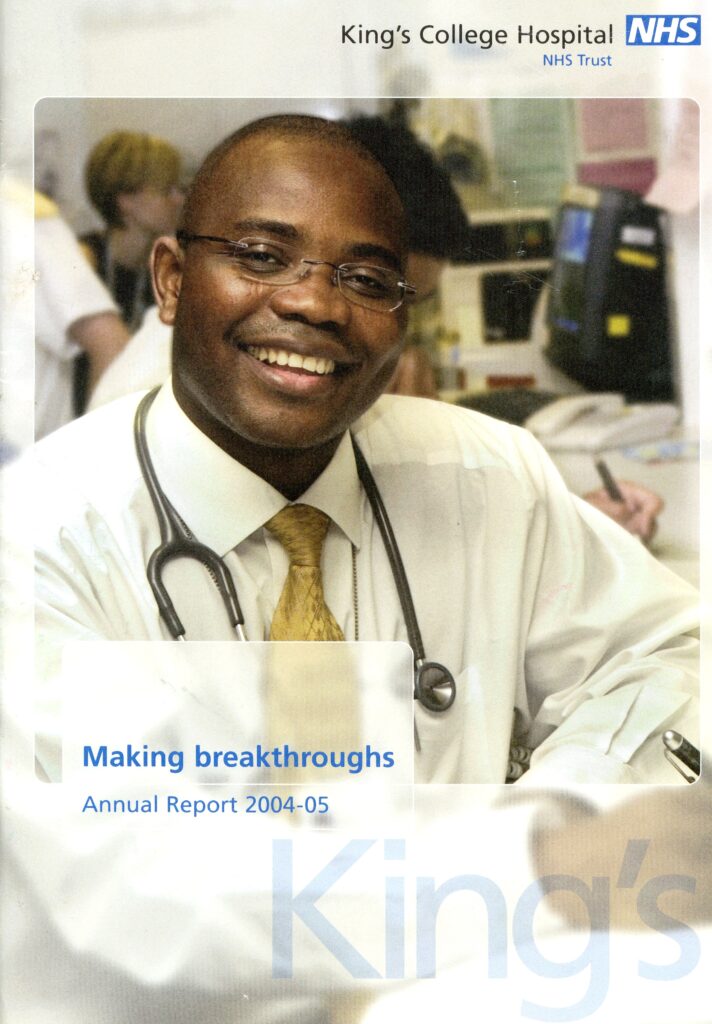

In 2000 Simona contributed to the ideation of the Psychotherapy Support Team and that same year funding was agreed for it. King’s College Hospital NHS Trust offered her a position as Principal Psychotherapist within a small team of practitioners and for the following eight years she worked with colleagues to establish, deliver, promote and develop the team’s services.
The Psychotherapy Support Team, subsequently renamed Counselling and Psychotherapy Team, was a highly regarded innovation. The rational for its creation was a recognition that patients, relatives and staff who experience illness and hospitalisation often find themselves in uncertain, fragile, powerless and difficult situations, facing painful and challenging questions about their own and other people’s existence.
A culture of health, well-being, cure, competence and scientific objectivity, together with powerful defensive mechanisms at both individual and institutional levels, may have silencing effects on these experiences. In turn, this may have considerable consequences for service users, professionals and organisations alike. In view of this, the overarching aim of the team was to provide Trust-wide opportunities to acknowledge and address such experiences and questions.
Whereas many NHS hospitals provide counselling or psychotherapy in some of their departments, this was the only team in the UK and probably worldwide delivering therapeutic and other services to in-patients, outpatients and relatives across all wards and departments of an inner-city acute general hospital, as well as a range of Trust-wide supportive and developmental services to staff and staff-teams at all levels.
The team was designed to maximise the cost effectiveness, responsiveness and sustainability of its services. To this end, each year three part-time senior clinicians managed and supervised a substantial placement for trainee counsellors and psychotherapists from a range of training institutions. This gave trainees an opportunity to gain the necessary clinical experience for their professional qualification and registration within an unusual, challenging, supportive and well organised structure. The innovative nature of the team’s work rendered its placement highly desirable and the competition to gain access to it was very high.
Whenever possible, practitioners from the team carried out their clinical work within conventional professional boundaries. Nevertheless, since hospitalised patients are often unable to leave their beds, in order to respond to their psycho-somatic needs work would be undertaken often at a patient’s bedside. This required considerable thoughtfulness, creativity, flexibility and responsiveness, careful attention to questions of boundaries and ethics and a capacity to work with constantly shifting frames, tailoring, adapting and responding to these according to individual needs and circumstances.
The clinical contribution made by trainees allowed senior clinicians to also engage in a number of other important activities. They designed and delivered corporate and local training on topics such as communication, listening, death, bereavement, communicating difficult news and working with difference; promoted and facilitated reflective practice for individual staff members and staff-teams; offered debriefing to staff who had experienced critical incidents; contributed to the formation and implementation of organisational policies and procedures, for example, in relation to the care of older patients, patients diagnosed with cancer and dying patients.
In 2005 Simona’s contribution was recognised by the Trust with a Commendation Roll of Honour. In 2007 she was appointed Consultant Psychotherapist and took up the management and leadership of the department until 2008, when she left the Trust.


